|
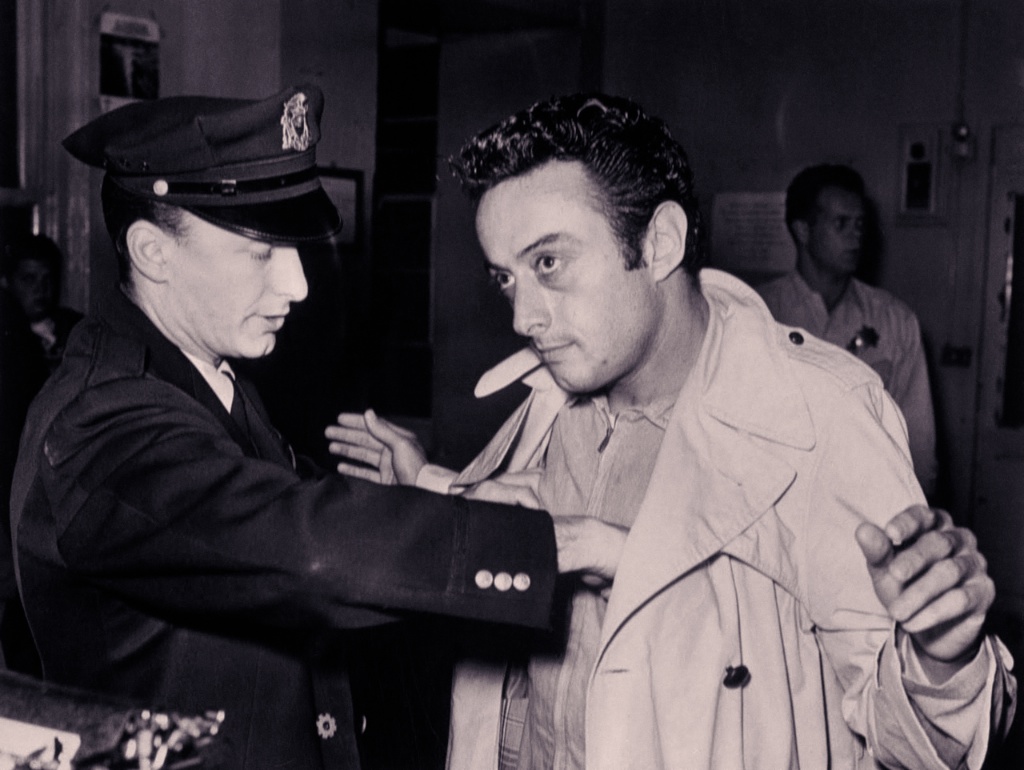
Two Five-Letter Words: Lenny BruceFor all his influence on modern stand-up comedy, Lenny Bruce left a surprisingly small body of moving-image work. We know him mostly from his recordings and tabloid stills like the one on the left. I first became interested in Bruce as teenager, presumably via the shout-out he's given in R.E.M.'s "It's the End of the World as We Know It." Some years later, I attended a work-in-progress screening of Robert B. Weide's documentary Lenny Bruce: Swear to the Truth, after which I sought Bob out, confessed my overlapping obsession, and sought his help in producing a museum exhibition of Bruce's work. Bob was a big help in directing me toward the known pieces of the comedian's legacy. The one element that eluded us was Bruce's early appearance with Buddy Hackett on Jerry Lester's Broadway Open House—an example of Lenny Bruce, light-weight impressionist, before he was Lenny Bruce, hard-edged satirist. Finally, in a festering corner of a garage in Florida, I found the complete footage. The other highlight here is an hour-long special Bruce did for WNTA in 1959, the height of his fame, which runs the gambit from his personally guided tour of Hubert's Dime Museum in Time Square to his assessment of the nation's socio-economic injustices. A perennial Museum attraction, the exhibit was reprised several times.
|
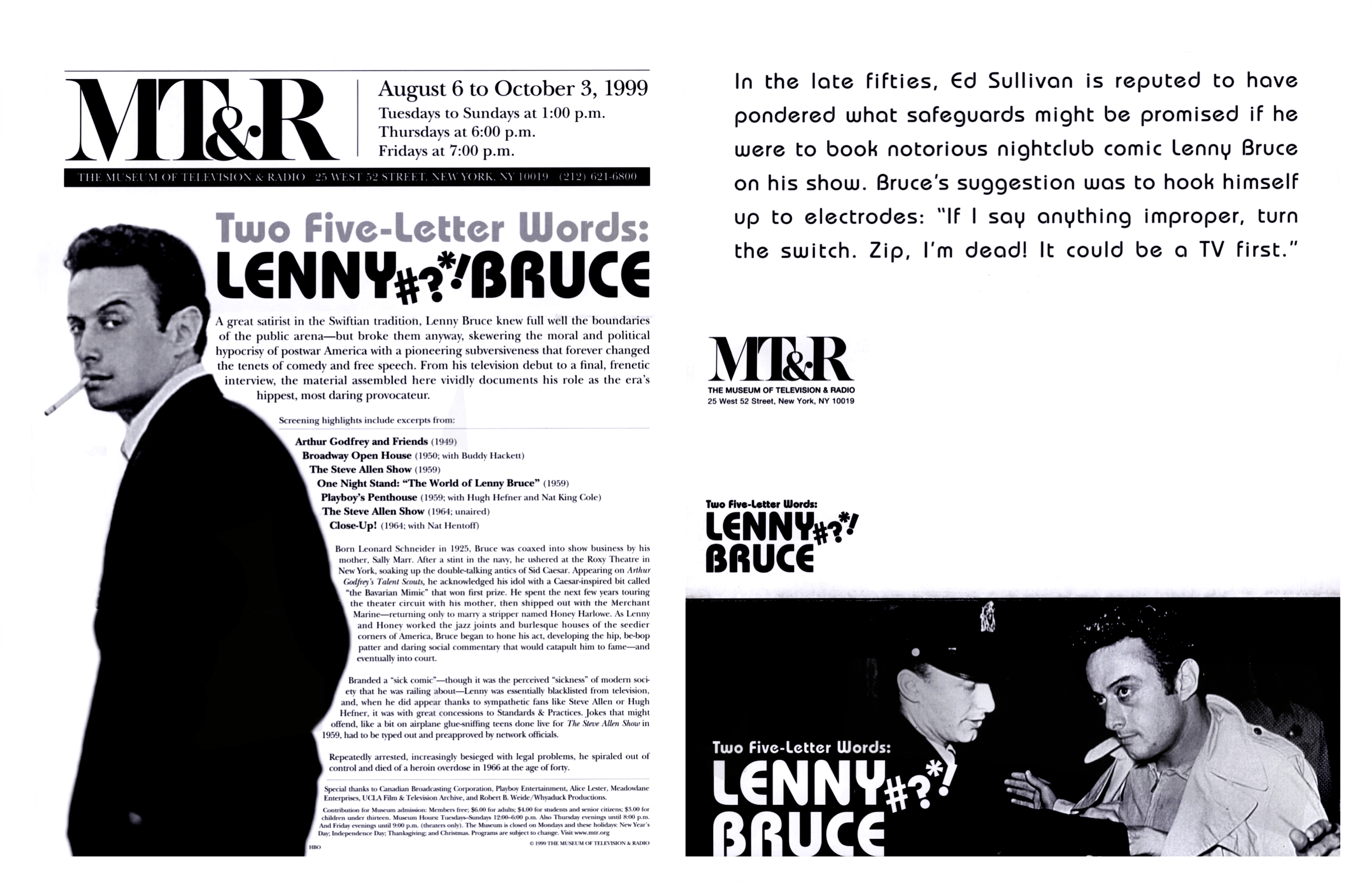
Exhibition Brochure
Press
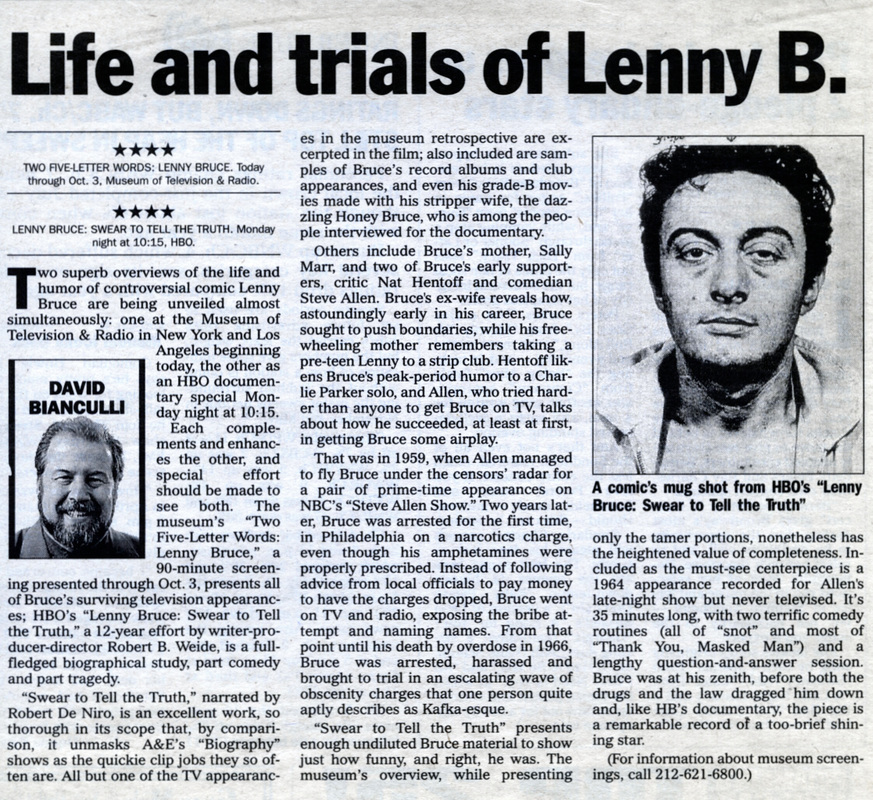
NY Daily News
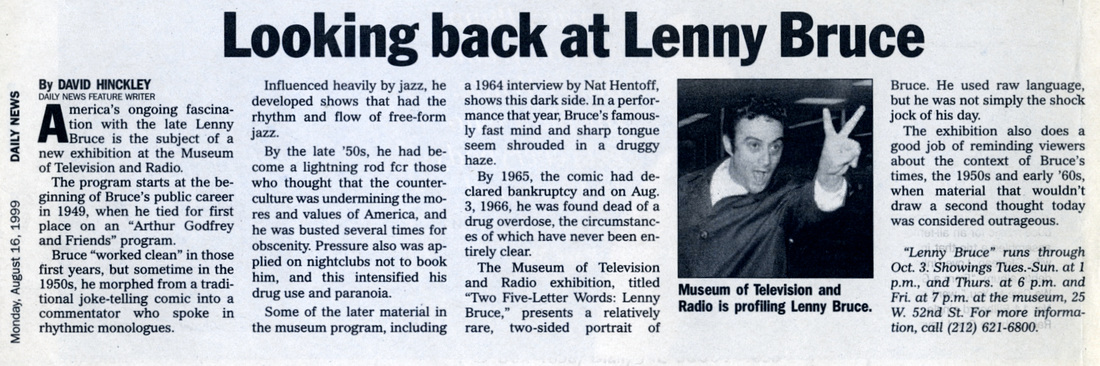
NY Daily News
|

Village Voice
|
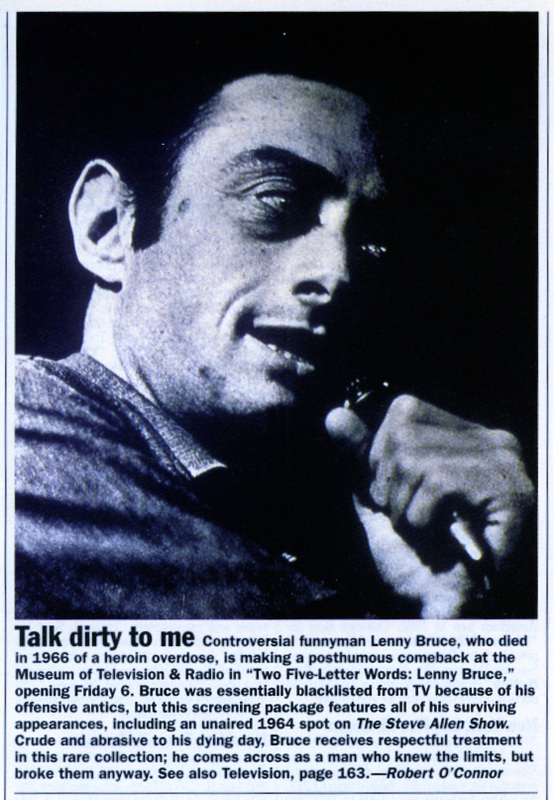
Time Out
|
New York Times
|
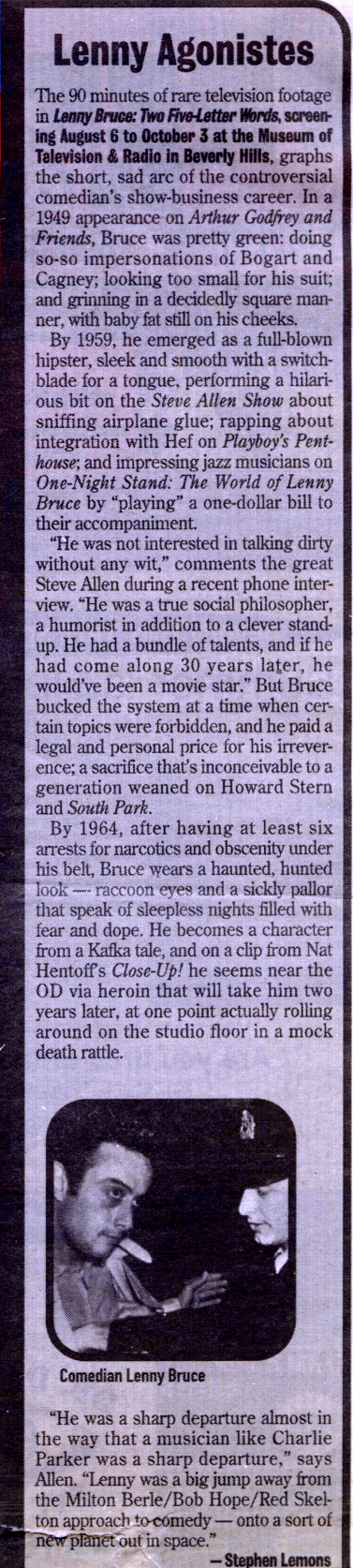
New Times (LA)
|
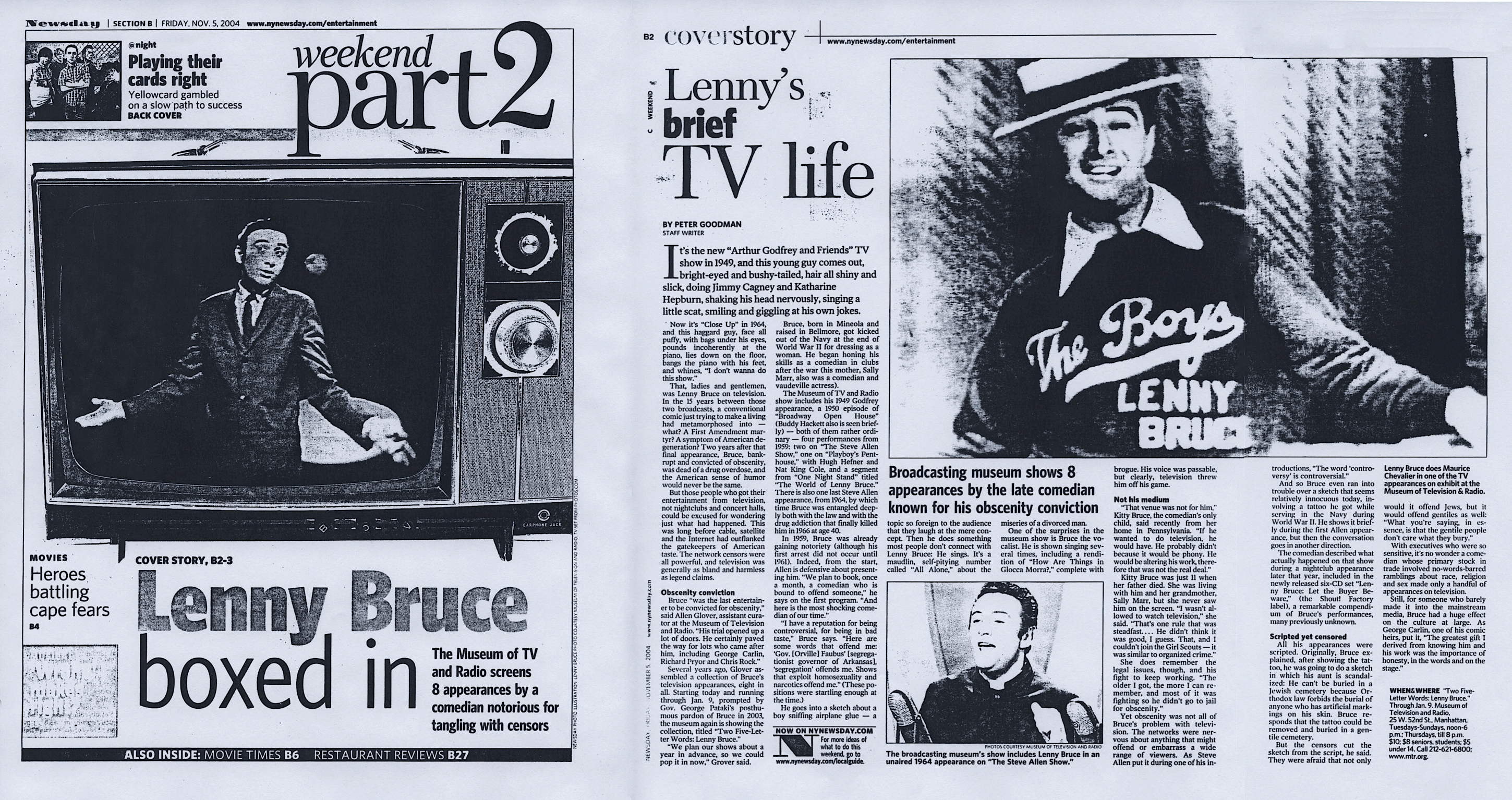
Newsday
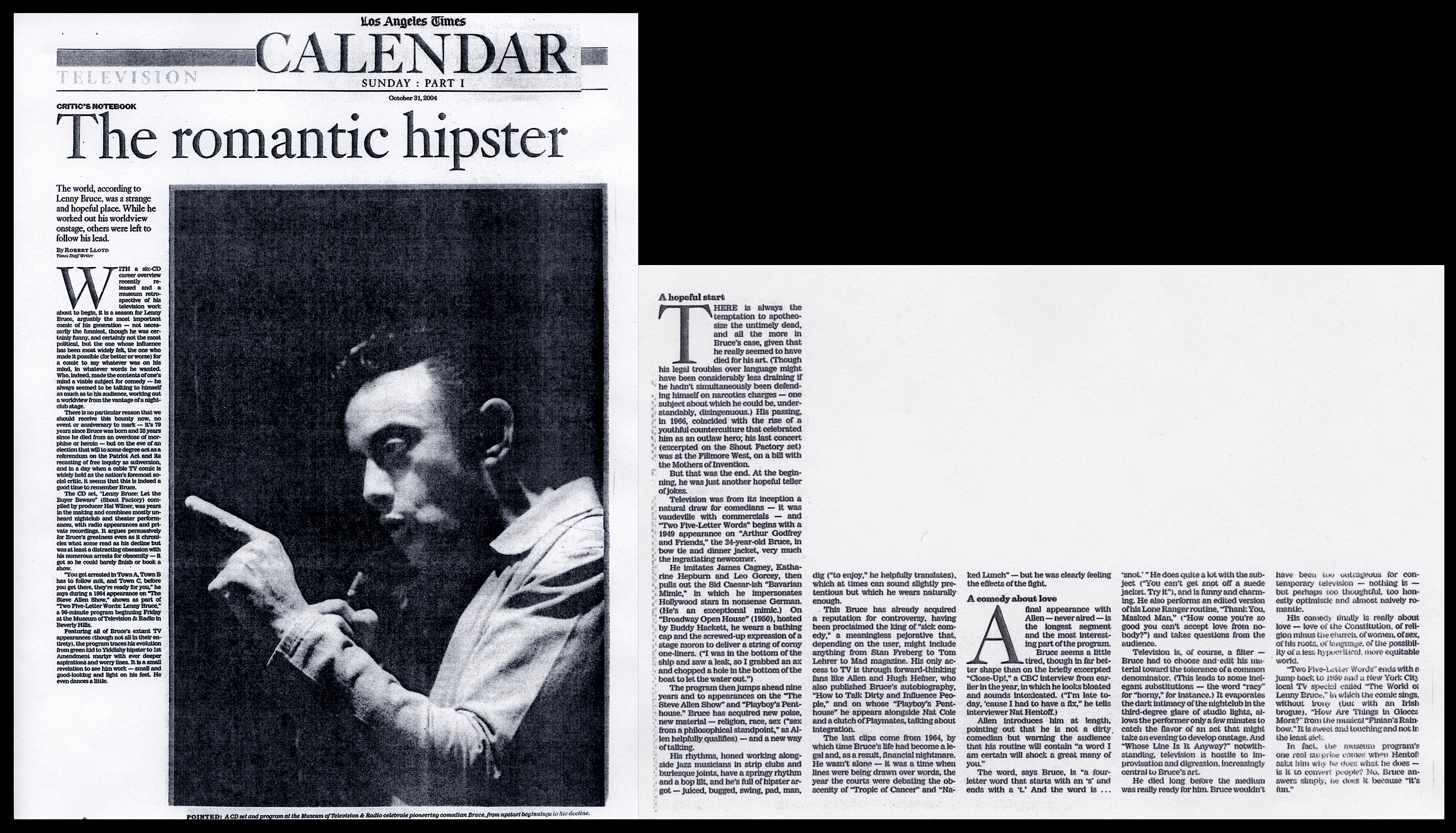
Los Angeles Times
|
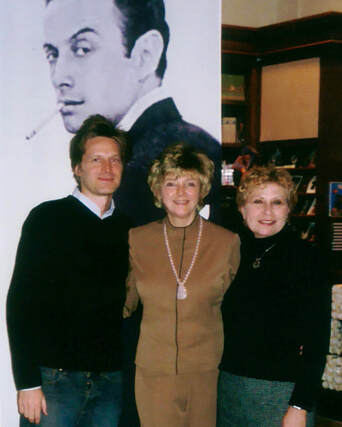
With Lenny's daughter, Kitty Bruce,
|
|